 Offices and service centers
 0700 16 166


Contact us

On the territory of Bulgaria

International line

Health line


On the territory of Bulgaria
International line
Health line

Find us on social media


On the territory of Bulgaria
International line
Health line
On the territory of Bulgaria
International line
Health line
Find us on social media
Two teams joined forces and dedicated their time to caring for the premises. Rather than creating something new, the volunteers focused their energy on maintaining an existing space that already serves an important purpose.
Volunteers joined fourth-grade pupils in planting trees in the school grounds. The children’s involvement gave the initiative an additional meaning. Rather than simply observing a change to their school environment, they became active participants in creating it.
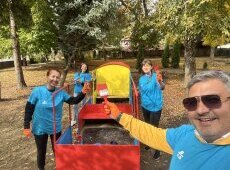
Children’s outdoor areas are places where even small improvements can make an important difference. They form part of children’s daily lives, providing space for movement, play and shared experiences. Caring for these areas therefore also means caring for the environment in which children spend their time outdoors.
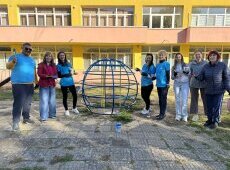
Located in one of the city’s largest residential districts, the kindergarten welcomes many children every day. Its outdoor facilities are used extensively for play, exercise and educational activities, making regular maintenance and improvements especially important.
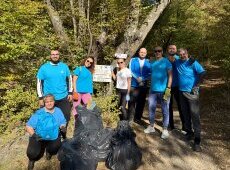
Employees, agents and representatives from different DZI teams joined forces around a common cause: contributing to the care and preservation of an area that is enjoyed by thousands of people every year.
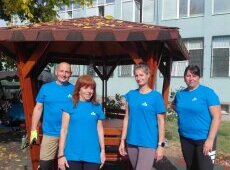
The centre plays a vital role within the local community by providing support, activities and opportunities for development to children and young people with diverse needs. Through its work, it contributes to greater social inclusion and helps participants build skills, confidence and independence.
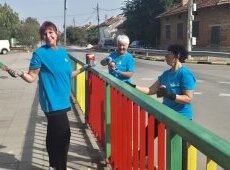
During the initiative, volunteers repainted 25 benches, three outdoor tables with seating areas and the kindergarten fence. The work covered a significant portion of the outdoor environment and immediately transformed the appearance of the yard.
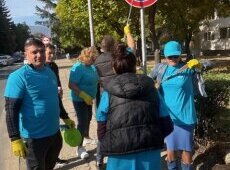
The project highlights an important aspect of volunteering: not all community improvement initiatives need to be large in scale to be effective. Sometimes, small interventions can provide immediate and measurable benefits to thousands of people who use public infrastructure every day.
